The Law of Supply and Demand
Understand the law of supply and demand in trading and how it determines price movement. Learn about the order book, auction theory, and the difference between passive and aggressive orders.

Ruben Villahermosa
Trader and Educator

The interaction between supply and demand determines price movement in all markets
The law of supply and demand is fundamental in trading. Supply = limit sell orders (ASK); Demand = limit buy orders (BID). But passive orders don't move price; only aggressive orders (market orders) do. For price to rise, buyers must consume all available supply and continue buying aggressively. The absence of one force also facilitates movement: without supply, price rises easily; without demand, it falls easily.
Here you will understand in a simple way what the law of supply and demand in trading is and how to master it in your investments. If you have specific questions or want to delve deeper into the content I share here, feel free to leave your questions in the comments.
If you don't have any doubts and just want to deepen the concept of how the law of supply and demand works, I invite you to read my books on trading and financial markets. You can get them both in PDF and physical format.
But what I definitely recommend first is that you read this short article where I explain the law of supply and demand with clear and visual examples.
Table of Contents
What is the Law of Supply and Demand in Trading? Updated Definition
Fundamental Definition
The law of supply and demand is a financial concept that indicates the relationship between the demand for a product or service and the quantity supplied of that product or service, all taking into account the price at which it is sold.
This law dictates that when the supply of an asset is greater than demand, the asset's price will decrease. On the other hand, when demand is greater than supply, the asset's price will increase.
Do you really understand why price moves?
The law of supply and demand in trading is one of the three basic laws that Richard Wyckoff introduced to financial markets.
This law governs all price changes, and therefore is the best indicator for future movements. It works in all markets and timeframes.
Video in Spanish with English subtitles available

Background of the Law of Supply and Demand
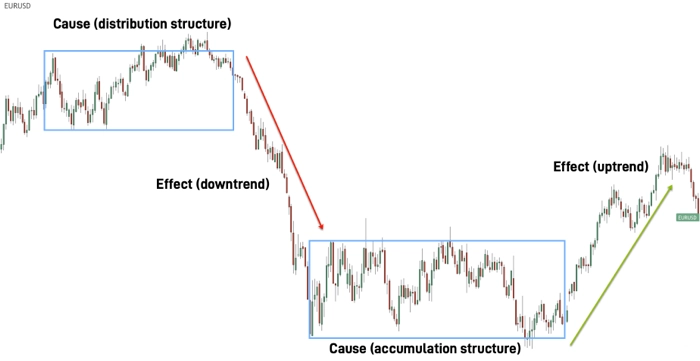
Richard Wyckoff was the first to introduce this fundamental law of economics and told us that if demand was greater than supply, the product's price would rise; that if supply was greater than demand, the product's price would fall; and that if supply and demand were in equilibrium, the product's price would remain stable.
Demand greater than supply
The product's price rises
Supply greater than demand
The product's price falls
Equilibrium between supply and demand
The product's price remains stable
Very Common Mistake
There is a very common mistake in thinking that prices rise because there are more buyers than sellers or that they fall because there are more sellers than buyers. In the market there is always the same number of buyers and sellers; because for someone to buy, there must be someone to sell to them.
Auction Theory and the Order Book
In the market there are buyers and sellers who interrelate to match their orders. According to auction theory, the market seeks to facilitate this exchange between buyers and sellers; and this is why volume (liquidity) attracts price.
Supply and Demand in the Order Book
The general theory accepted in economics tells us that supply is created by sellers through the placement of limit (pending) sell orders in the ASK column and that demand is created by buyers through the placement of limit buy orders in the BID column.
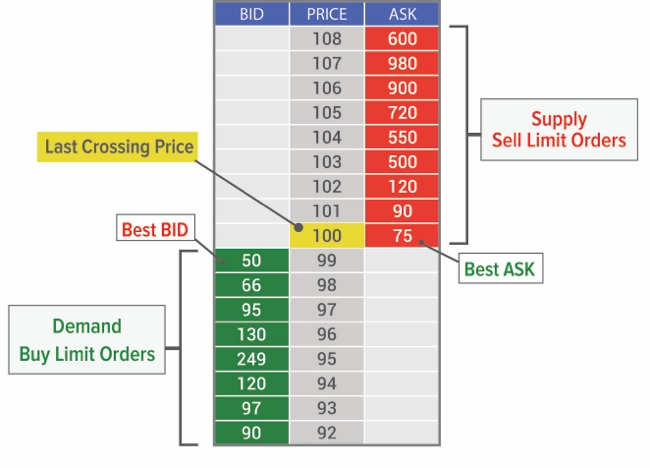
There is a very common mistake in calling demand everything related to buying and calling supply everything related to selling. The ideal is to use different terms to distinguish between aggressive and passive operators.
"The terms supply and demand correspond to taking a passive attitude by placing limit orders in the BID and ASK columns."
— Key Concept
When an operator takes the initiative and goes to the BID column to execute an aggressive (market) order, they are known as a seller; and when they go to the ASK column they are known as a buyer.
All this is a mere formality and has more to do with economic theory than with practice. The key to everything lies in the types of orders executed. We must differentiate between market orders (aggressive) and limit orders (passive).
Passive vs Aggressive Orders
Passive Orders (Limit): Represent only intention, have the ability to stop a movement; but not the ability to make price move. For that, initiative is needed.
Aggressive Orders (Market): Execute immediately at the best available price. These are what actually move the price by consuming existing liquidity.
Price Displacement
Initiative
Bullish Movement
For price to move upward, buyers must acquire all sell orders (supply) available at that price level and continue buying aggressively to force price to rise a level and find new sellers to trade with there.
Passive buy orders cause the bearish movement to stop, but by themselves they cannot make the price rise. The only orders that have the ability to move the price upward are market buys or those that through order crossing become market buys.
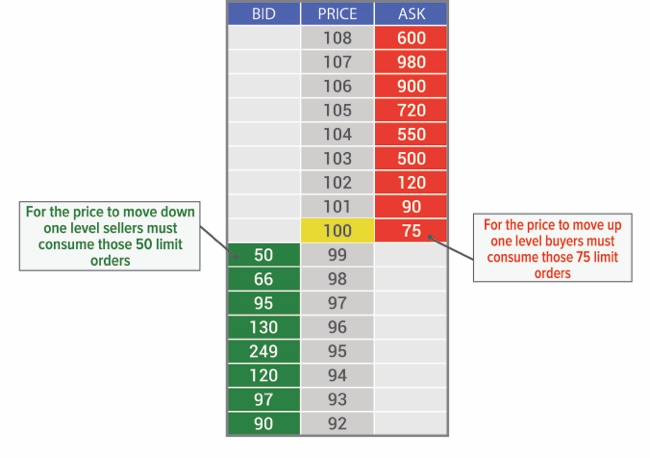
- Active buyer entry: Market orders that consume all available supply
- Short Stop Loss execution: Stop losses from short positions generate automatic buy orders
Therefore, an upward price movement can occur through active buyer entry or when Stop Losses of short positions are executed.
Bearish Movement
For price to move downward, sellers must acquire all buy orders (demand) available at that price level and continue pushing down forcing price to search for buyers at lower levels.
Passive sell orders cause the bullish movement to stop, but they don't have the ability to make the price fall by themselves. The only orders that have the ability to move the price downward are market sells or those that through order crossing become market sells.
- Active seller entry: Market orders that consume all available demand
- Long Stop Loss execution: Stop losses from long positions generate automatic sell orders
Therefore, a downward price movement can occur through active seller entry or when Stop Losses of long positions are executed.
Lack of Interest
Advanced Concept
It is also necessary to understand that the absence of one of the two forces can facilitate price displacement. An absence of supply can facilitate price rise just as an absence of demand can facilitate its fall.
Absence of Supply
When supply withdraws, this lack of interest will be represented as a smaller quantity of contracts placed in the ASK column and therefore price will be able to move more easily upward with very little buying power.
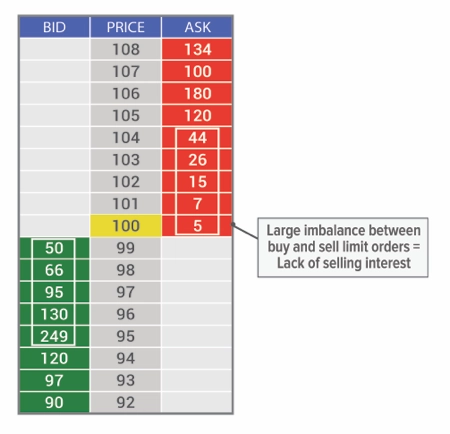
Absence of Demand
Conversely, if it is demand that withdraws, it will translate into a reduction in the contracts that buyers are willing to place in the BID and this will make price fall with very little selling initiative.
Practical Implication: When you analyze a price movement, don't just look for the force driving it. Also ask yourself: is there an absence of the opposing force? This explains many fast movements with little volume.

To read the real interaction between supply and demand —who's the aggressor, absorption, initiative— I use order flow with real data in NinjaTrader.
Affiliate link · paid partnership with NinjaTrader · #ad #NinjaTraderPartner
Conclusion
What Really Matters
Regardless of the origin of the buy or sell order (retail trader, institutional, algorithm, etc.) the result is that liquidity is added to the market; and this is what really matters when trading.
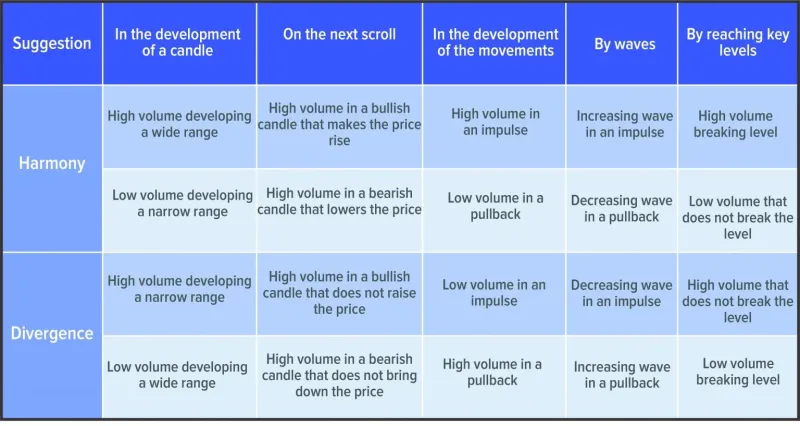
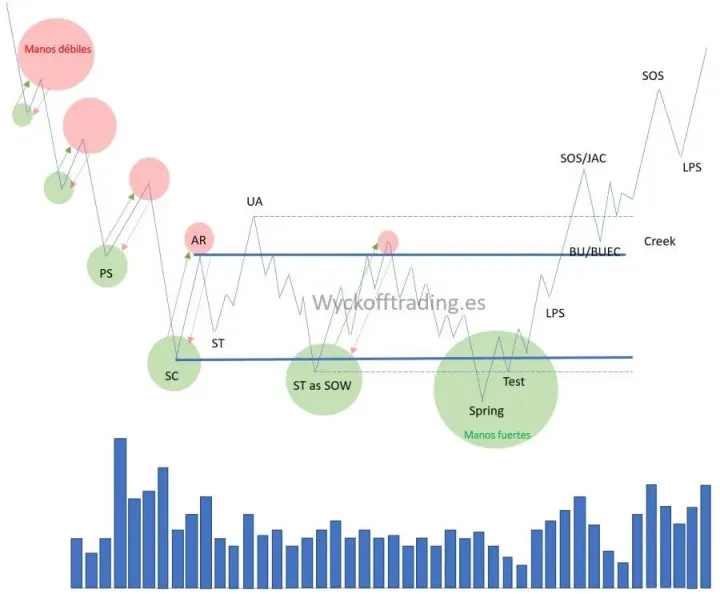
Two of the tools we can use to understand the result of that interaction between supply and demand are price and volume.
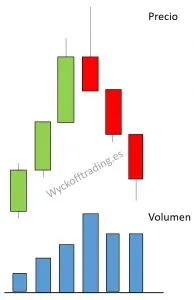
It is necessary to develop the ability to correctly interpret price action with respect to its volume if we want to know at all times what is happening in the market.
"This is why I consider the Wyckoff methodology to be a truly solid approach when analyzing what is happening on the chart (accumulation and distribution processes) and making judicious scenario assessments."
— Ruben Villahermosa
Wyckoff 2.0: Structures, Volume Profile and Order Flow
This article is an excerpt from the book where you will learn to integrate the most advanced analysis tools: Volume Profile and Order Flow, with the operational logic of the Wyckoff methodology.
View book